Choosing a Preschool in Bangsar
What actually differs between settings, which numbers matter, and what to watch for on the visit.
By the Epic Smart Academy teaching team · 11 min read
Published 10 September 2026 · Updated 10 September 2026
Choosing a preschool in Bangsar is harder than it should be, and not because there are too few options. There are many, they all photograph well, and almost all of them describe themselves in the same language: nurturing, child-centred, holistic, play-based. None of that helps you tell them apart.
This guide is about what actually differs between preschools, what to look for on a visit, and which of the things parents worry about turn out to matter least.
What actually matters in a preschool?
Three things above all: the adult-to-child ratio, staff turnover, and how children are spoken to. Curriculum labels, facilities and marketing language vary far less in practice than they appear to. A warm, stable, well-staffed room with a modest playground beats an impressive building with high turnover every time.
Key takeaways
- Ratio and turnover are the two numbers that matter. Ask for both, specifically, for your child’s room.
- Watch how adults speak to children during the visit. It tells you more than any brochure.
- Curriculum labels differ less than they sound. Delivery quality varies far more than the method.
- Visit unannounced if you can, or at least at a normal moment rather than a showcase slot.
- Proximity genuinely matters at this age, because a long commute costs a small child more than an adult.
What this guide covers
What actually differs between preschools
Marketing materials emphasise facilities, curriculum philosophy and enrichment activities. In practice, children of this age have broadly similar experiences across these, and the variables that shape their day are less photogenic: how many adults are in the room, whether those adults are the same ones as last term, and the emotional temperature of the space.
That is not a criticism of preschools with good facilities. It is a caution about how parents weigh their observations. A beautiful outdoor area is genuinely nice and it will matter less to your child’s experience than whether their teacher knows them well.
Fees in Bangsar span a wide range and correlate less tightly with quality than families expect. The expensive option is sometimes buying you ratio and stability, and sometimes buying you a building. Working out which requires asking.
The single most useful question: “How many of the staff in this room were here a year ago?” The answer, and the ease with which it is given, tells you more than any tour.
Ratios and group size
Adult-to-child ratio determines how much individual attention your child receives, how quickly distress is noticed, and how much of the day is spent managing a group rather than engaging with children.
Ask for the actual figure in the specific room your child would join, at the specific times of day. Some settings quote an overall staffing number that includes people who are not in the room, or a ratio that only applies at peak times. The honest answer is a number for a room at 10am on a Tuesday.
Group size matters alongside ratio. Two adults with sixteen children is a different environment from two adults with eight, even though the ratio looks identical on paper. Noise, transitions and waiting all scale with the total, and for younger children that matters.
Staff, and why turnover matters
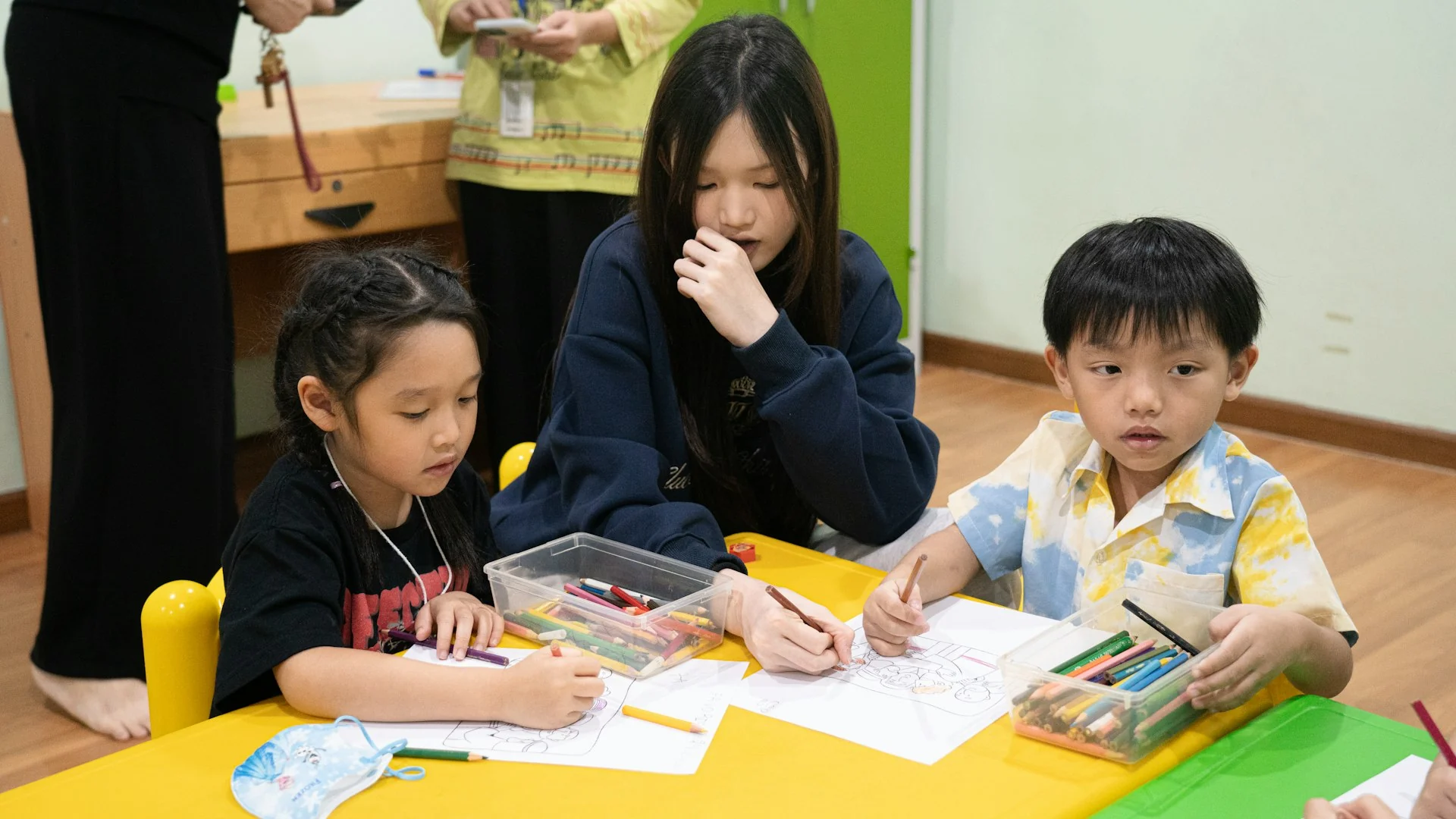
Young children learn through relationship. A teacher who knows a child’s temperament, what settles them, and what they were working on last month is doing something a replacement cannot do for a term. High turnover resets that repeatedly.
Turnover is also a reliable proxy for how a setting is run. Preschools that treat staff well tend to keep them, and settings where teachers stay for years are usually places where children are treated well too. It is one of the few things you can ask about that reveals culture.
Ask about qualifications too, and listen for how the setting talks about training. Somewhere that mentions ongoing professional development unprompted is usually somewhere that invests in it.
“You are not choosing a building. You are choosing the adult who will spend more waking hours with your child this year than you will.”
Curriculum labels, decoded
Preschools in Bangsar describe themselves using a handful of recognisable approaches, and the labels mean less than the delivery. A well-run setting using one approach will serve your child better than a poorly-run setting using the approach you preferred on paper.
Play-based
Learning through structured and free play. Most common and most variable in how it is actually delivered.
Montessori-inspired
Child-led activity with specific materials. ‘Inspired by’ is not the same as accredited, so ask which is meant.
Academic or structured
More formal early literacy and numeracy. Suits some children and can be a poor fit for others at this age.
Reggio-influenced
Project-led, child-directed, heavy on documentation of learning. Depends enormously on staff skill.
The useful question is not which philosophy but what a Tuesday actually looks like. Ask for the day’s rhythm hour by hour. That description tells you what your child will really experience, and it cuts through the terminology entirely.
Language of instruction
Bangsar families frequently have more than one language at home, and preschool is where the balance gets decided by default rather than by choice. Worth deciding deliberately.
Ask what language is used for instruction, what is used informally between staff and children, and whether other languages are introduced. Those three answers are often different, and the informal one usually has the largest effect on a young child.
There is no single right configuration. What matters is that it matches what you want, and that you know what you are choosing. Children handle multiple languages well at this age; what they handle less well is inconsistency between what is claimed and what happens.
What to look for on the visit
Visit during an ordinary session rather than an open day. Open days are staffed differently and behave differently, and you learn very little from them beyond how the setting presents itself.
What to watch, not ask
- How adults speak to children who are upset, not to the ones who are content
- Whether staff are down at child height or supervising from standing
- How transitions are handled, since that is when a setting’s culture shows
- Whether children approach staff freely or wait to be addressed
- Whether the displayed work looks like children made it or adults did
- The noise: busy is good, chaotic is not, and silent is worth asking about
Trust your reaction to the room. Parents are usually right about atmosphere and usually talk themselves out of it because the facilities were impressive. If you leave uneasy without being able to say why, visit again before deciding.
Questions worth asking
Beyond ratios and turnover, a short list of practical questions surfaces most of what you need. How is settling in handled for a new child. What happens when a child is unhappy for a sustained period. How do you communicate with parents, and how often. What is the policy on illness. How are behavioural difficulties approached.
That last one is revealing. A setting that answers with a considered approach involving understanding the cause is telling you something different from one that answers with a sanctions ladder.
Ask about the transition to primary too, and whether the setting prepares children for the specific systems local families move into. Preparation for an international curriculum differs from preparation for a national one.
Preparing for the transition to primary
The transition matters more than most preschool marketing suggests, and it is where the academic-versus-play debate finally becomes practical. Children moving into a structured primary environment benefit from some familiarity with routine, sitting for short focused periods, and early literacy and numeracy exposure.
That does not mean formal academics at four. It means a setting that gradually builds attention span, independence and confidence with letters and numbers through activity rather than worksheets. The difference is in how it is done, not whether.
Where a child needs more focused support with early reading or number, structured help at this stage is genuinely effective because the gaps are still small. That is what our early years and phonics programme is built for, and our guide to when to start tuition covers how to tell whether it is needed yet.
Getting ready for primary school?
If you are unsure whether your child is where they should be with early reading or number, come and talk to us. We will tell you honestly if the answer is simply more time.
Book a free consultationFrequently asked questions
What matters most when choosing a preschool?
Adult-to-child ratio, staff turnover, and how adults speak to children. These shape a child’s daily experience far more than facilities or curriculum labels, and they are the things marketing materials mention least.
What ratio should I look for?
Ask for the actual figure in your child’s room at ordinary times of day, not an overall staffing number. Group size matters alongside ratio, because two adults with sixteen children differs from two with eight.
Does the curriculum approach matter?
Less than delivery quality. A well-run play-based setting will serve your child better than a poorly-run Montessori one. Ask what a Tuesday actually looks like hour by hour rather than which philosophy is followed.
Should I visit on an open day?
Prefer an ordinary session. Open days are staffed and run differently, so they show you how the setting presents itself rather than how it operates.
How important is location?
Genuinely important at this age. Long commutes cost small children more than adults, affecting mood, nap timing and how the whole day goes, so a nearer good option often beats a further excellent one.
What about language of instruction?
Ask three separate questions: what language is used for teaching, what staff use informally with children, and what else is introduced. The informal answer usually has the largest effect and is the one least often stated.
How do I judge the atmosphere?
Watch how staff respond to an upset child rather than a happy one, whether they are at child height, and how transitions are handled. Trust your instinct about the room; parents are usually right and often talk themselves out of it.
Should preschool prepare my child academically?
Some readiness helps: attention span, routine, independence, and early familiarity with letters and numbers. That is different from formal academics at four, and the distinction is in how it is delivered rather than whether it happens.